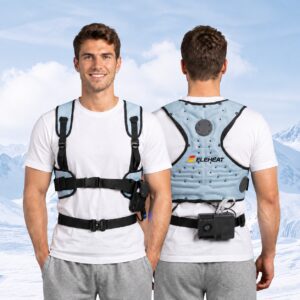
Cooling Vests for Construction Sites
This page is for site managers, safety officers, and subcontractors working rebar, formwork, roofing, and civil works. Construction heat is a solar problem, not a room problem: a rebar deck radiates upward, a formwork panel returns heat to the face and chest, and a roof membrane holds heat at ankle height. Hard hats, hi-vis, gloves, and boots close off the skin, shade moves with the sun, and the heaviest work often falls in the hottest hours.
Why heat is a problem in this work
On a structural deck the dominant load is radiant, from the sun above and from the steel and concrete below. A worker tying rebar bends over hot steel in a hard hat and gloves, so sweat cannot evaporate and the main cooling route is blocked. Wind helps only when it reaches the skin, and on a formwork deck the panels block it. Civil works adds reflected heat from fresh concrete and a work face that keeps moving.
Shift timing matters more on site. Crews often start at first light to place concrete before the peak, which pushes the hottest hours onto finishing, curing, and clean-up. A ten-hour day on an open deck leaves no cool room to recover in, and the break is usually a shaded area at grade. A cooling garment has to be carried up with the crew.
Which cooling system fits
| Working condition | Recommended system | Why | Runtime |
|---|---|---|---|
| Rebar fixing on an open deck, full sun | Water circulation vest | Steady cooling through a long pour cycle | 4-8 hours per fill, about 4 hours at 35 C |
| Formwork and falsework, dust and grit | Battery fan kit | Airflow without water lines at height | 8-12 hours at low speed |
| Roofing, short tasks in high radiant load | PCM cooling vest | Packs swap between roof sections, no pump at height | 2-4 hours per set |
| Civil works, crew moving between faces | Evaporative cooling vest | Light to carry, refilled from a site tap | 4-6 hours per fill |
What crews actually wear
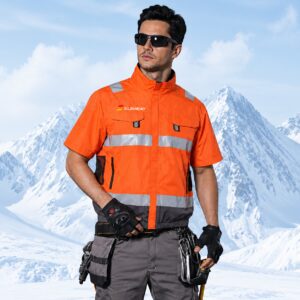
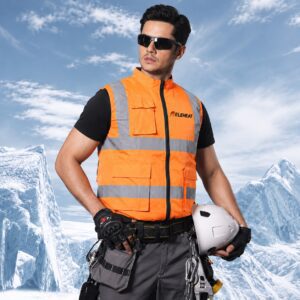
On site the garment has to sit under hi-vis and a harness without interfering with either. That means a close fit, packs clear of where a harness leg loop crosses the hip, and a vest a worker can put on or take off with gloves on. Site teams test the fit with the full PPE set, harness and tool belt included, before ordering for a crew. Runtime by system is listed in our FAQ section.
- Water circulation vests for rebar decks and pour cycles past four hours in direct sun.
- Battery fan kits for formwork and falsework where airflow matters more than a cold surface.
- PCM cooling vests for roofing crews who work in short bursts and swap packs at access points.
Frequently asked questions
Does a cooling vest fit under hi-vis and a harness?
The vest is worn as a base layer under hi-vis clothing, and the harness goes over both. Fit matters at the hip and shoulder, so we ask for chest measurement and vest size at order. Test the full PPE set before a crew rollout.
How do crews refill a vest on site?
A water circulation vest runs 4 to 8 hours per fill, about 4 hours at 35 C, and refills from a site tap at the break. An evaporative vest runs 4 to 6 hours per fill. Both are filled at the water point, not carried up full.
What is the minimum order and lead time?
MOQ is 50 sets for stock models and 200 for custom color or logo. Samples take 7 to 10 days and bulk orders 25 to 35 days. Production runs in a 12,000 m2 factory with 700 staff, at 80,000 to 120,000 sets per month.
What certification and warranty come with the kit?
Battery packs are CE certified, and battery and fan parts carry a 12-month warranty. Production follows an ISO 9001 quality system. We send the battery specification so your safety officer can review it against site rules.
Tell us the trade, deck or roof type, and shift pattern, and we will recommend a system with a realistic pack count.
Models for this scenario
Recommended products
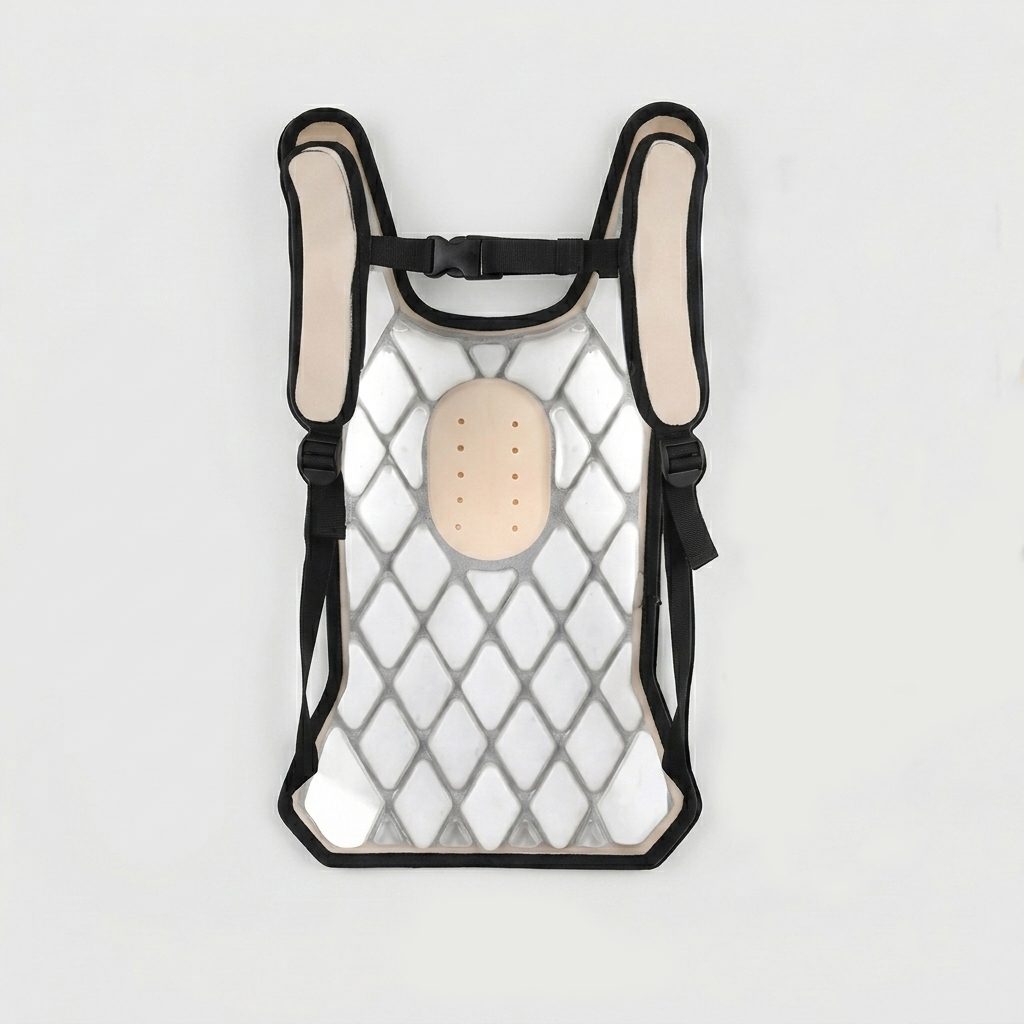
Backpack Style Diamond PCM Cooling Vest, Phase Change Cold Storage Waistcoat for Long Time High-Temperature Operation
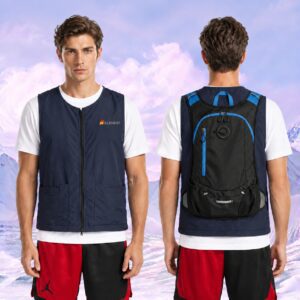
Backpack Style Water Circulation Cooling Vest, Unisex Water Cooling Waistcoat for Outdoor Sports
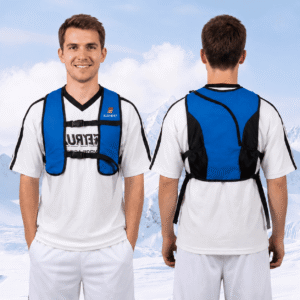
EC-A-022 Liquid Cooling Close-Fitting Vest, Skin-Tight Liquid Circulation Cooling Vest for High Temperature Work
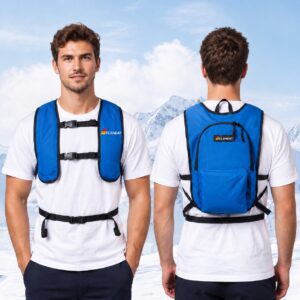
EC-A-023 Liquid Cooling Close-Fitting Vest, Skin-Tight Liquid Circulation Cooling Vest for High Temperature
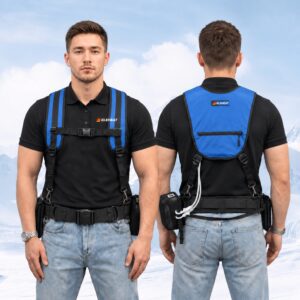
EC-A-024 Heat Cold Exchange Temperature Control Vest, Bidirectional Cooling & Warming Functional Thermostatic Vest