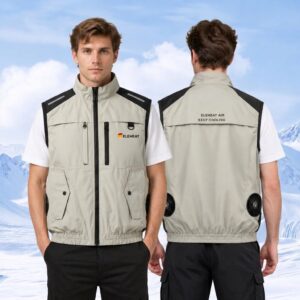
Cooling Vests for Road and Utility Construction
This page is for supervisors and safety managers running road resurfacing, pipeline repair, utility trenching, and bridge maintenance crews. The work is outdoors, often on fresh asphalt or bare concrete, and it runs through midday because that is when the lane closure or outage window is granted. Heat arrives from three directions at once: sun, hot pavement, and engine exhaust. With breaks fixed by traffic control, crews need cooling that runs on its own power and clears their PPE.
Why heat is a problem in this work
Radiant heat is the dominant load on a road or bridge deck. Asphalt and concrete absorb solar energy and re-radiate it upward while the sun hits from above, so the load on a worker in an open lane is higher than the air temperature suggests. Add the heat rejected by a paver, roller, or generator set and the crew is standing inside several heat sources at once. Traffic control also limits how far a worker can step into shade.
The shift pattern compounds the load. A resurfacing or pipe crew may work eight to twelve hours with a fixed lunch break, and the benefit of that break disappears minutes after returning to the deck. High-visibility vests and fall protection trap vapor close to the torso, so sweat cannot do its job. Cooling has to work under that clothing while the wearer moves, lifts, and bends.
Which cooling system fits
| Working condition | Recommended system | Why | Runtime |
|---|---|---|---|
| Open road or bridge deck, full sun | Water circulation vest | Steady torso temperature | 4-8 hours per fill, about 4 hours at 35 C |
| Remote span, no water supply | PCM cooling vest | No refill needed; spare packs extend the day | 2-4 hours per set |
| Utility trench, vault, or under-bridge space | Peltier cooling vest | No ice or water lines | 3-5 hours on a 20,000 mAh pack |
| Dry inland site with no charging point | Evaporative cooling vest | No battery draw | 4-6 hours per fill |
What crews actually wear
On most sites the base layer is a water circulation vest worn over a moisture-wicking shirt and under the hi-vis vest. Crews keep a spare filled reservoir in the truck and swap at the lunch break, which keeps cooling running through the afternoon. Where there is no water supply, PCM packs go into a cooler. Peltier vests suit trench and vault work where the wearer is confined or seated for long periods.
- Water circulation cooling garments for open deck and road work with a refill point on site.
- PCM cooling garments for remote spans and medians where no water is available.
- Battery fan kits as a light option for flaggers and inspection staff.
Frequently asked questions
Can a cooling vest be worn under a hi-vis vest and fall harness?
Yes. Water circulation and PCM vests sit close to the body, so a hi-vis vest and harness fit over them. Route the harness straps outside the cooling garment and check that the battery pouch sits flat against the belt. Test the full layering once before the first shift.
How do crews refill water vests on a highway job?
Most crews carry a water container in the site truck and refill at the lunch break. A water circulation vest runs 4-8 hours per fill, about 4 hours at 35 C, so one refill covers most shifts. Keep a second reservoir where the crew is far from the truck.
Does cooling gear interfere with PPE compliance?
The garments sit under standard hi-vis clothing and do not replace any required protection. Confirm with your safety officer that the added layer still allows the harness to be inspected and adjusted. Our factory works to an ISO 9001 quality system, and battery packs on Peltier and fan products carry CE marking.
What is the order minimum for a crew rollout?
Stock models start at 50 sets. Custom color and logo runs start at 200 sets. Samples take 7-10 days and bulk production 25-35 days. Most contractors order a trial batch, then extend once fit and runtime are confirmed. More detail is on our FAQ page.
Send us your shift length, site conditions, and crew size, and we will recommend the configuration that fits.
Models for this scenario
Recommended products
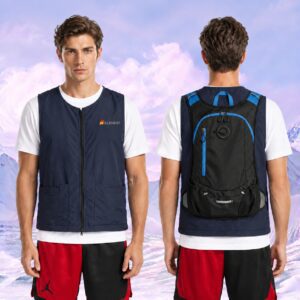
Backpack Style Water Circulation Cooling Vest, Unisex Water Cooling Waistcoat for Outdoor Sports
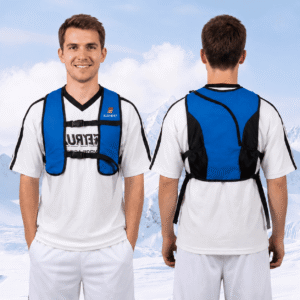
EC-A-022 Liquid Cooling Close-Fitting Vest, Skin-Tight Liquid Circulation Cooling Vest for High Temperature Work
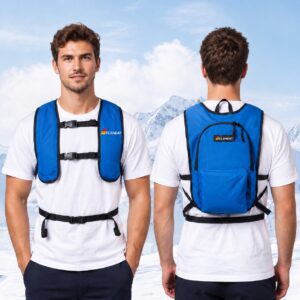
EC-A-023 Liquid Cooling Close-Fitting Vest, Skin-Tight Liquid Circulation Cooling Vest for High Temperature
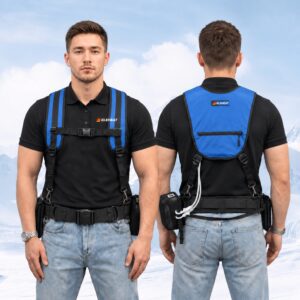
EC-A-024 Heat Cold Exchange Temperature Control Vest, Bidirectional Cooling & Warming Functional Thermostatic Vest
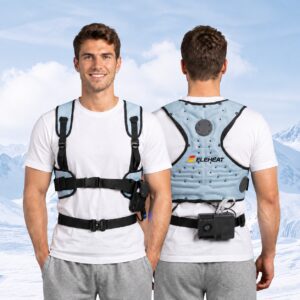
EC-A-034 TPU Water Cooling Peltier Vest, Dual Cooling Functional Heat Relief Vest for High Temperature
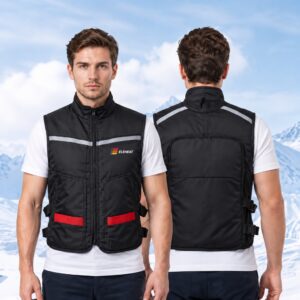
EC-A-052 Evaporative Cooling Garment, Water Evaporation Heat Resistant Functional Work Clothes
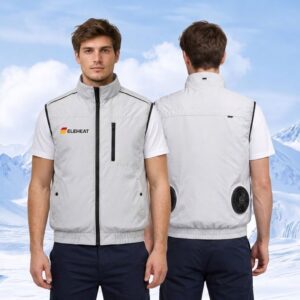
Fan & Water Circulation Cooling Garment for Assembly Line Workers, Summer Heat Relief Factory Workwear